
The main causes of slips and falls are wet or slippery floors and uneven surfaces, like cracked concrete or a loose floorboard. In Orlando, those hazards show up most where heavy foot traffic runs all day, like theme parks, hotels, restaurants, and grocery stores.
If a fall on someone else’s property left you hurt, an Orlando slip and fall lawyer at DWK Law can help you work out what caused it and who’s responsible.
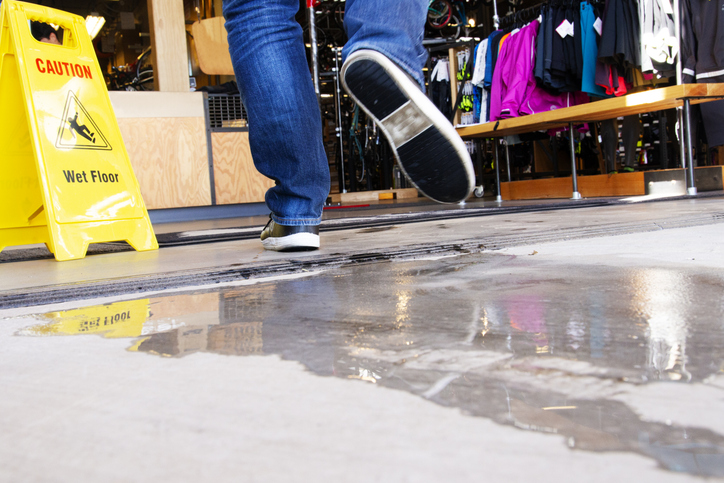
What are the most common causes of slips, trips, and falls?
Most slip and fall accidents trace back to a few specific conditions:
- Wet floors from spills, mopping, tracked-in rain, or leaking equipment
- Slippery surfaces near pools and drink stations
- Uneven flooring, broken tile, cracked walkways, or a raised mat edge
- A loose floorboard or a worn stair tread
- Poor lighting in stairwells and parking garages
- Clutter or cords left in a walkway
Rain is its own factor. As locals know, Central Florida gets afternoon storms most of the summer, and tile just inside a busy entrance turns slick in a matter of minutes.
Why does the cause of your fall matter to your claim?
If you slip on a spill or another loose substance inside a business, Florida law requires you to show the business had actual or constructive knowledge of the condition and should have fixed it. That knowledge question sits on top of the four elements behind any claim of negligence in personal injury: duty, breach, causation, and damages.
A puddle a guest spilled two minutes earlier is a hard claim. The same puddle, still there three hours after it was reported, is a different story. Proving liability after a fall usually comes down to cleaning logs, incident reports, camera footage, and what the staff on shift remember.
What’s the difference between a one-time spill and a recurring hazard?
A one-time spill is harder to pin on a property owner, because nobody may have had a chance to find it yet. A recurring hazard is easier. Florida lets you show constructive knowledge if the condition sat there long enough that ordinary care would have caught it, or if it happened regularly enough to be foreseeable. Say a drink cooler in a shop off International Drive leaks onto the tile every afternoon. Past complaints can often help prove that pattern.
What should a property owner have done about the hazard?
Reasonable care may include finding problems before a guest does, reasonable inspections, and a trip hazard handled in a timely manner. Preventing slips and trips may also include warning people while a repair is pending, with a cone or a sign. Where the same hazard keeps coming back, reducing the risk of tripping may require more than a warning.
What are the main causes of slips and falls at work?
Falls at work come from the same conditions as anywhere else, plus ladders and unguarded edges. The Bureau of Labor Statistics counted 844 fatal falls, slips, and trips on the job in 2024. Florida handles most workplace injuries through workers’ compensation rather than a claim against an employer. If a different company controlled the property where you fell, a premises liability claim against that company may also be available, so falls in the workplace are worth a second look.
Hurt in a fall on someone else’s property? DWK Law can look at what caused it
If a fall on an Orlando property left you injured, seek medical attention first, since records from the day of the fall carry more weight than records from a month later. From there, DWK Law can help you figure out what caused it and who was responsible. Our attorneys handle premises cases across Central Florida, including theme park injuries and negligent security claims.
We work on a contingency fee basis, so you pay no attorney’s fees or costs unless compensation is recovered. Call (407) 244-3000 for a free consultation, or contact us online.