
You prove it by showing that whoever controlled the property was negligent and that the negligence caused your fall. In practice, it comes down to one question: what did they know about the hazard, and when?
Florida has a specific rule for transitory foreign substances in a business establishment, while other premises liability rules may apply in different situations. An Orlando slip and fall lawyer at DWK Law can tell you which applies.
What does Florida law require you to prove about the property owner’s knowledge?
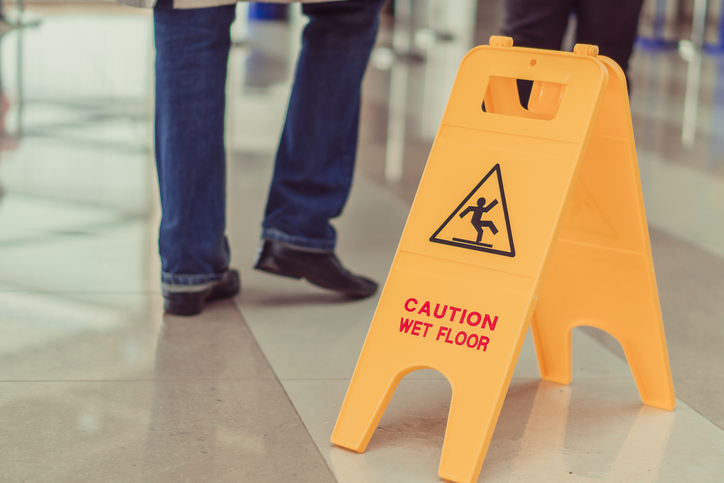
That they knew about the hazard, or should have. For a fall on a spill or other transitory foreign substance inside a business, Florida Statute 768.0755 requires you to demonstrate that the business establishment had actual or constructive knowledge of the dangerous condition and should have taken action to remedy it.
Constructive knowledge matters most, because it doesn’t require proving the property owner knew in the literal sense. You can establish it with circumstantial evidence that the condition lasted long enough that the business should have known, or that it occurred with regularity and was therefore foreseeable.
A drink spilled two minutes before you walked through may not meet either test. A leak that repeatedly created puddles in the same spot could support the second.
That statute covers business establishments. Fall on a broken stair at an apartment complex and ordinary premises liability rules apply instead, where a lack of warning signs can carry weight too.
What evidence is used to prove a slip and fall claim?
Whatever pins the hazardous condition down in time and place. Photographs taken before anyone cleans up do more than anything else, which is why the first hour matters.
- Photos of the accident scene and of the hazard itself
- Photos of your injuries
- Witness statements
- Incident reports from when you reported the slip and fall incident
- Medical records connecting the injury to the fall
- Surveillance footage, before it gets overwritten
- Records of earlier complaints about the same condition
A personal injury lawyer can tell you which pieces carry weight in proving liability on your facts. DWK has more on gathering evidence.
Can you still recover if you were partly at fault?
Yes, unless you’re found more than half at fault. Florida uses modified comparative negligence, and Fla. Stat. § 768.81(6) bars recovery only for a party “found to be greater than 50 percent at fault for his or her own harm.”
Below that line, your damages drop by your share. If a jury puts you 10 percent at fault on a $100,000 case, you recover $90,000.
The line sits above 50 percent, so a claimant found exactly half responsible still recovers half. That precision is why the percentage is often the real argument in a slip and fall accident case.
How long do you have to file a slip and fall lawsuit in Florida?
Two years from the date of the fall, for most claims.
Claims against a government body work differently, and they generally get more time rather than less. Florida gives you three years to present written notice to the agency and four years to file suit. Skipping the notice step can end a claim that was otherwise well inside the deadline.
Different tolling rules may apply in limited circumstances, so the deadline should be evaluated based on the specific facts of the case. The real cost of waiting is evidence, which disappears long before any deadline arrives.
Hurt in a fall on someone else’s property? DWK Law can help
If you fell because a hazard went unaddressed, a premises liability lawyer can tell you whether the knowledge requirement is met on your facts. Beyond your out-of-pocket costs, a personal injury lawsuit can account for pain and suffering.
DWK Law has represented injured people in Orlando since 1989, and our firm works on a contingency fee basis, so you pay no attorney’s fees unless compensation is recovered. Call (407) 244-3000 or contact us online for a free consultation.